Friday, 29 August 2014

Calling all Burmese scholars


Applications are invited for the Charles Wallace Burma Trust Visiting Fellowship which will
be hosted by the Centre of South Asian Studies, University of Cambridge, in partnership with
the Charles Wallace Burma Trust and the British Council in Burma.

The Fellowship is intended to enable a Burmese scholar to conduct research on any aspect of
modern Burmese history and society, and is open to scholars working in all disciplines
related to this field.

The Fellowship is for a period of three months during the Lent Term, 2015 (13 January to 13
March).

The aim of the Fellowship is to advance the scholarly achievements of the visiting fellow,
and thereby establish productive academic links between Cambridge and Burma.

Candidates who have had financial support from the Charles Wallace Burma Trust in the past
five years will not be eligible.

Provided they are qualified in other respects, candidates with little or no prior international
experience are strongly encouraged to apply.

At the conclusion of the Fellowship period, the Fellow will be required to submit a report to
the Committee of Management of the Centre of South Asian Studies and to the Secretary of
the Charles Wallace Burma Trust outlining what he or she has achieved.

An all-inclusive monthly stipend of £1,400 is offered by the Trust to cover costs at
Cambridge, together with a contribution towards a return economy air fare from Burma, and
the cost of the candidate’s UK visa. The Fellow is expected to make his/her own travel
arrangements.

The British Council in Burma will offer advice to the Fellow about securing a UK visa, and
provide some pre-departure briefing.

If you know of anyone from Myanmar (Burma) who might be interested in applying, please direct them to the relevant part of the Centre's website: http://www.s-asian.cam.ac.uk/centre/fellowship.html

Deadline for applications is 31 October 2014

Candidates are invited to submit the following by email to: admin@s-asian.cam.ac.uk
  • a letter of application setting out as precisely and as clearly as possible the programme of research to be undertaken
  • the names of scholars already in Cambridge working in a similar or adjacent/related subject and with whom the fellow would hope to work
  •  a full CV with a list of publications; and
  •  ask not more than two academic referees to email directly in support of his or her application by the closing date of 31 October 2014.
Please note that, in order to comply with work permit regulations, the successful applicant
will be asked to submit a signed, original copy of his/her application and original, signed
references.

The selection will follow the Centre of South Asian Studies’ policy and procedure for
Academic Visitors and is subject to the approval of the Charles Wallace Burma Trust and the
British Council in Burma.

The closing date for applications is 31 October, 2014. The Fellow is expected to take up the
post at the beginning of the Lent Term 2015 (13 January 2015).

Applications and enquiries should be sent to:
The Administrator, Centre of South Asian Studies, Alison Richard Building, 7 West
Road, Cambridge, CB3 9DT, UK

Thursday, 28 August 2014

Archives of art curator Donald Bowen

RCMS 360_4_1 Indian quarters, 1943
Cambridge University Library's Royal Commonwealth Society Collection has published an on-line catalogue of an important recent acquisition, the archives of Donald Bowen (1917-), artist and Curator of the Commonwealth Institute’s Art Gallery. The collection includes memoirs and correspondence documenting Bowen’s early training at the Chelsea School of Art, the Byam Shaw School of Drawing and Painting, and tuition with the artist and occultist Austin Osman Spare. Bowen describes his military training and service during the Second World War, including the Battle of Arras and evacuation at Dunkirk, and his commissioning into the Royal Engineers. Bowen served in India between 1943 and 1947, travelling widely. One of the treasures of the collection is an album of drawings in pencil and related media depicting India’s people, landscapes, architecture, plants and animals.


RCMS 360_3 Exhibition of Oshogbo and West Nigeria artists, 1974
In 1953, Bowen joined the Imperial Institute (later the Commonwealth Institute), initially as Exhibitions Officer, and became Curator of its Art Gallery in 1962. He provides an insider’s view of the institute’s move to its iconic new building in Kensington High Street, which opened in the same year. Its purpose built galleries soon won a central position in the contemporary London art scene. Between 1962 and his retirement in 1979, Bowen organised more than 200 exhibitions of paintings, drawings, prints, sculpture, the crafts and other media, working with established and emerging Commonwealth artists, many of whom had never exhibited in Britain before. Correspondence, memoirs and other material vividly reflect the planning, organisation and impact of the exhibitions.

RCMS 360_5 Trafalgar Cemetery, Gibraltar, 1988


As an acknowledged expert on Commonwealth Art, Bowen travelled extensively, and the collection records an educational visit to West Africa in 1968, and a lecture tour of Canada in 1969, undertaken after an invitation to address the Canadian Society for Education through Art. A second volume of original art work includes pencil drawings executed during the visits to West Africa and Canada.


To view the collection catalogue, please follow the link:


http://janus.lib.cam.ac.uk/db/node.xsp?id=EAD%2FGBR%2F0115%2FRCMS%20360


For information about accessing the archive in Cambridge University Library, please see:

http://www.lib.cam.ac.uk/deptserv/rcs/visiting.html


Post by John Cardwell, RCS Archivist.

Friday, 18 July 2014

Gujarati Textiles - an exhibition at the SADACC Trust


Held at the Old Skating Rink Gallery, Bethel Street, Norwich
Open 9:30 - 5:00pm Mon to Sat, Closed Sunday
Copyright © 2014 The SADACC Trust, All rights reserved.

Our mailing address is:
The SADACC Trust
The Old Skating Rink,
34-36 Bethel Street
Norwich, Norfolk NR2 1NR
United Kingdom

Tuesday, 20 May 2014

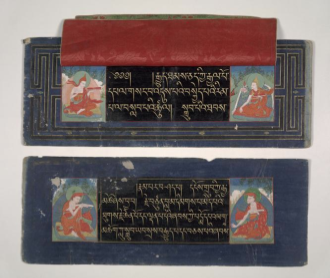
Cambridge's first Tibetan exhibition

Buddha’s Word: The Life of Books in Tibet and Beyond
28 May 2014 – 17 January 2015
Buddha’s Word: The Life of Books in Tibet and Beyond is the first exhibition of Tibetan material in Cambridge. It will display some of the world’s oldest Sanskrit and Buddhist manuscripts – and a gift from the 13th Dalai Lama – in a special exhibition on Buddhist books at Cambridge University from May 28th 2014.
Buddha’s Word: The Life of Books in Tibet and Beyond
28 May 2014 – 17 January 2015

It puts on display for the first time the Museum of Archaeology and Anthropology’s astonishing Buddhist artefacts and brings together collections and research from three of the University of Cambridge Museums; the Museum of Archaeology and Anthropology, Sedgwick Museum of Earth Sciences and the Fitzwilliam Museum – as well as the University Library, the Department of Archaeology and Anthropology, the Faculty of Asian and Middle Eastern Studies, and Emmanuel and Pembroke Colleges.

Historians, anthropologists, linguists, art historians, chemists and material scientists have all contributed to this unique view into the complex world of the book in Buddhism.

Exhibits of particular note include some of the oldest illuminated Buddhist manuscripts from the first decades of the eleventh century, specimens of skilfully illuminated wooden covers and a quartet of scroll paintings brought back from the controversial Younghusband Expedition.

Dr Hildegard Diemberger, Co-Curator, describes the exhibition as “telling the story of the incredible journeys that the words of the Buddha have taken – crossing mountains and oceans and taking different material forms in different places.”

This story is told through the curation of three distinct spaces within the Li Ka Shing gallery at the museum. First to greet visitors will be a Himalayan Buddhist Altar which demonstrates an exploration of the text as sacred object, as a relic of the Buddha. Secondly, the Laboratory shows how Tibetan books are made and analysed, investigating the long history of printing in Tibet and the recent discoveries made by Cambridge scientists and scholars about the pigments used in illuminations. The final section, the Library, traces the journeys taken by Buddha’s word from India, across Asia, to places as far apart as Sri Lanka and Japan, Mongolia and Taiwan.

“It’s a real first,” said Dr Mark Elliott, Senior Curator in Anthropology at the Museum of Archaeology and Anthropology. “A lot of these artefacts have never been seen on display before, and certainly not together. But we’re also looking at Tibetan books, and Tibetan Buddhist art, in a completely new way. There have been some real surprises during the development of the exhibition and we’re looking forward to sharing some of those with visitors.”

This exhibition is one outcome of a series of Cambridge-based, linked projects carried out over the past decade. These projects include Tibetan and Mongolian Rare Books and Manuscripts; Transforming Technology and Buddhist Book Culture: The Introduction of Printing and Digital Text Reproduction in Tibetan Societies; and the Sanskrit Manuscript Project, all funded by the British Arts and Humanities Research Council (AHRC), and Tibetan Books Evolution and Technology (TiBET), supported by the Marie Curie Intra-European Fellowship. Thanks to exchange schemes run by the Mongolia & Inner Asia Studies Unit, Tibetan scholars have been able to engage with these materials providing new insights and understandings of their cultural significance.

Professor Nicholas Thomas, Director of the Museum of Archaeology and Anthropology, said: “This is a truly collaborative project that exemplifies the research strengths of the University of Cambridge and the extraordinary potential of the Arts Council-funded Connecting Collections programme, that brings together the collections and expertise of all the University of Cambridge Museums. This particular project has also been generously supported by the Arts and Humanities Research Council.”
From the Buddhist Altar, to the Library, to the Laboratory, this exhibition promises to be an inspiration for scholars, Buddhists and curious people of all ages and backgrounds. It is the story of the transformation of Buddha’s words, from palm leaves, to paper, to digital dharma; you will never look at a book in the same way again.

Buddha’s Word: The Life of Books in Tibet and Beyond
28 May 2014 – 17 January 2015

For more information please contact Verity Sanderson, Marketing and Press Coordinator, University of Cambridge Museums on 07872 410663 or vcs25@cam.ac.uk

Friday, 11 April 2014

Twenty libraries in Delhi you've never visited

SAGAR: a south asia research journal
Anyone planning a research trip to Delhi should read Daniel Majchrowicz's archive review in the October 11th 2013 issue of  SAGAR: a South Asia Research Journal.

Daniel, a PhD candidate in the field of Islamic Cultures of South Asia at Harvard University, reviews twenty libraries often overlooked by visiting scholars.  The online article includes links to library websites (where available), location maps, and lots of helpful tips about the collections and buildings, including the best times to visit them.

Monday, 7 April 2014

Bhutan photographic exhibition

The Department of Geography Library, at the University of Cambridge, is currently exhibiting photographs from a research project undertaken in the Kingdom of Bhutan. This is the pilot in a proposed series of small exhibitions showing the wide-ranging research interests of members of the department.

The current exhibit 'Hidden Lands and Sealed Mountains: Places and Spaces in a Conservation Landscape' illustrates the work of Riamsara Kuyakanon Knapp, who conducted her doctoral fieldwork on sacred natural sites and the conservation-culture-development nexus in Bhutan with the kind support of the Ugyen Wangchuk Institute for Conservation and Environment, Royal Government of Bhutan.

Riamsara writes: I was raised and grew up in Thailand while it was undergoing rapid economic development and personally witnessed changing landscapes and changing human values around me. Thus I am interested in the human engagement with nature and environmental conservation, and specifically the expression of Buddhist philosophies and practices and the ways in which conservation landscapes are culturally inflected. My PhD research concerns the relationship between environmental conservation and Buddhist beliefs and practices and my research draws from and addresses theorizations in cultural landscapes and political ecology. I am interested in multi-disciplinary research and employ methods from the social and environmental sciences.


The exhibition can be viewed during library opening hours. No appointment is required.  See:  http://www.geog.cam.ac.uk/library/opening/  Afternoons are generally the best time to visit, as the library is quieter. 


Monday, 10 March 2014

Visual Anthropology and Contemporary South Asian History conference

Right hand image from Tymms 8, Royal Commonwealth Society Film collection,
copyright Cambridge University Library

Registration is now open for the interdisciplinary conference ‘Visual Anthropology and Contemporary South Asian History’, http://www.crassh.cam.ac.uk/events/25024, which takes place at CRASSH, University of Cambridge, 4-5 April 2014.

Conveners
Dr Annamaria Motrescu-Mayes (University of Cambridge)
Professor Marcus Banks (University of Oxford)

Summary
The ‘Visual anthropology and contemporary South Asian history conference’ aims to offer historians, anthropologists and postgraduate history students a unique opportunity to share and strengthen their scholarship within a cross-disciplinary research network concerned with the crucial relevance of applying theories of visual anthropology to the study of contemporary South Asian history. This conference is the result of the positive feedback and detailed suggestions received during the ‘Exploring modern South Asian history with visual research methods’ pre-conference seminar series organised in February-March 2013 by the Centre of South Asian Studies (CSAS) in collaboration with the CRASSH and the Royal Anthropological Institute, and led by historians, anthropologists and postgraduate students (podcasts available here). Accordingly, this conference has two objectives. First, it will examine the ways in which scholarship in the field of visual anthropology informs historiographical methodologies pertinent to re-interpreting, producing, distributing, and repatriating visual records of South Asian history. Second, it will create a strategically innovative research and practice-based framework for postgraduate history students at the University of Cambridge interested in experimenting with, and advancing new cross-methodological approaches. These objectives will be achieved by securing the participation of some of the key scholars in the fields of visual anthropology and South Asian history, and by organising a special pre-conference workshops which will introduce the theme of the conference and help postgraduate history students explore new ways in using visual research methods. 

Keynote addresses will be delivered by Professor David MacDougall (Australian National University) and by Professor Elizabeth Edwards (Vice-President of the Royal Anthropological Institute and Director of Photographic History Research Centre at De Montfort University). Professor Alan Macfarlane (University of Cambridge) will present a special contribution. Other invited speakers include Professor Christiane Brosius (Heidelberg University), Professor Malavika Karlekar (Centre for Women’s Development Studies, New Delhi), Dr Lotte Hoek (University of Edinburgh), Dr Zoe Headley(Institut Français de Pondichery), Dr Vron Ware (Open University) and Dr Mandy Rose (UWE).

The conference will host a special session titled ‘Tamil Societies and Visibility' in association with the Fondation Maison Science de l’Homme, Paris, and Centre of South Asian Studies, Cambridge. Speakers include Dr Raffaela Cucciniello, Dr Sujit Sivasundaram, Dr Annamaria Motrescu-Mayes.

The pre-conference workshop will be dedicated to ‘Writing South Asian history with visual research methods’. Prof. Marcus Banks and Dr Motrescu-Mayes will advise on the methodology used by ten postgraduate history students who will work with unique visual records selected from the collections held by the CSAS. The aim of this workshop is to introduce history students to using theories of visual anthropology to the study of contemporary South Asian history. The research findings and short visual essays produced by the students during the workshop will be subsequently presented and discussed during a three-hour special conference session chaired by Professor Banks. Also, CRASSH Digital Humanities network will participate in designing and developing the pre-conference postgraduate student workshop with a view to expand and integrate similar practice-based learning strategies within digital humanities programs. As a result, building on the valuable on-going collaboration between CRASSH and CSAS, ‘Visual anthropology and contemporary South Asian history’ conference will continue to advance and strengthen the dynamic, international and cross-disciplinary research network formed by scholars of historical and visual anthropological studies of South Asia.'

Sponsors: Supported by the Centre for Research in the Arts, Humanities and Social Sciences (CRASSH), the Smuts Memorial Fund, the Centre of South Asian Studies (University of Cambridge), the Fondation Maison Science de l’Homme, Paris, and the Thriplow Charitable Trust.


Wednesday, 5 March 2014

The Salvation Army in South Asia

SAALG members who attended our 90th conference at the University of Cambridge Library enjoyed a day of fascinating talks, a visit to the wonderful new Centre of South Asian Studies building and a chance to view a wide range of collections including films, maps and archives. One of the many highlights of the day was discovering the significant South Asia related material held at the Salvation Army International Heritage Centre (which comprises archives, a library and a museum).

Image copyright: Salvation Army International Heritage Centre 
Hari Jonkers, Archives Assistant, introduced us to items relating to the Salvation Army's international administration including the South Asian Zonal Department, records of 'Overseas Territories' - the Bangladesh Command, Sri Lanka Territory, Singapore, Malaysia and Myanmar / Burma territory and various Indian territories. Their collection also includes personal papers of Salvation Army missionaries who served in South Asia such as the Lutz family.

Image copyright: Salvation Army International Heritage Centre 
Particular subject strengths have developed, for instance there is a considerable amount of material relating to Indian 'criminal tribes', including books and pamphlets held in their reference library.

Only a small fraction of the collections are currently searchable via the online catalogue  but new records are regularly being added and updates about collections can be found on the Heritage Centre's blog  where Hari has just posted more about their South Asia material. 

If you would like more information about the collections please contact:

Salvation Army International Heritage Centre, William Booth College, Champion Park, London, SE5 8BQ

Telephone: 020 7326 7800

Email: heritage@salvationarmy.org.uk

The Centre is open from 9.30 to 4.00pm Tuesday to Friday. To view items from the library or archive collection please make an appointment before you visit.

Monday, 3 March 2014

Tagore goes online in Bengali and English

Some of you may remember that back in May 2013 we posted on the then upcoming launch of a new online variorum of the works of Rabindranath Tagore. SAALG was very fortunate to welcome Sukanta Chaudhuri, emeritus professor at Jadavpur University, to present the website in all its glory at our recent 90th conference.  Sukanta led the team at the School of Cultural Texts and Records, Jadavpur University - Calcutta, who collaboratively worked for two years to execute the project. 


The website includes all of Tagore's writings in Bengali and English, in all their versions, from manuscript to print and special features include a unique collation software (the first in Indic script), a search engine which locates any word or phrase used in his works whether print or manuscript, a checklist of all Tagore's manuscripts and a comprehensive bibliography of all his works. The website can be navigated in three languages - English, Bengali and Hindi. 

The website is called bichitra and is free to access at: http://bichitra.jdvu.ac.in/index.php


Saturday, 1 March 2014

Themes in Literature of the Indian Subcontinent - Book Talk Series at SOAS

This 2013-2014 book talk series at SOAS explores overarching ideas such as double segregation, isolation and nostalgia in the works of major contemporary authors of the Indian diaspora in relation to the changing historical, political, socioeconomic and cultural contexts of migration. The talks are free and all are welcome! The talks are led by Kavita Ramdya (SOAS) and take place in Room 279, Russell Square: College Buildings from 17.00 - 19.00. 

On Monday 3rd March  Jhumpa Lahiri's "Unaccustomed Earth" published in 2008 will be discussed. The collection of short stories explores the tensions that arise from growing up in an Indian household in America, inter-generational communications and arranged versus love marriage.

On Monday 7th April discussion will centre around "Nacropolis" by Jeet Thayil, a fictional representation of Bombay's drug trade as told through multiple narrators over the course of three decades. 

This series is one of the many events organized by the new SOAS South Asia Institute. For further information and a listing of future events please visit: http://www.soas.ac.uk/ssai/events/


Saturday, 15 February 2014

Sir Frederick Tymms: the flying civil servant

Frederick Tymms (on the left), with Rod Doucla [sic]
whilst working on the Cape to Cairo Air Route in 1929
Cambridge University Library RCMS 20/2/9/30

Frederick Tymms (2nd from left), camera in hand,
with Wolley Dod, Lindup, and Francis, whilst planning the Cape to Cairo Air Route, 1929
Cambridge University Library RCMS 20/2/9/10


Frederick Tymms (2nd from left) in Allahabad in 1934
with T. Campbell Black and C.W. Scott for the England-Australia Race
Cambridge University Library RCMS 20/2/15/1

'Imperial Airways - Delhi Flying Club - handing over',  January 1932
Cambridge University Library RCMS 20/2/10/139

The Royal Commonwealth Society collections in Cambridge University Library hold the archives of Sir Frederick Tymms,  RCMS 20, one of the most significant figures in the development of civil aviation, referred to by his biographer, E.A. Johnston, as the 'Flying Civil Servant'.

Tymms served as an Observer in the Royal Flying Corps during WW1, then joined the civil aviation department of the Air Ministry 1920-1927 where he became involved in the development of air routes across Africa and India in the 1920s and 30s.  His archives document the difficulties of locating suitable landing strips at regular distances across each continent and the excitement at the opening of new aerodromes. 

During the 1930s and much of the 1940s Tymms was in India where he was appointed Director of Civil Aviation 1931-1942. For a brief period in 1942-1943 he became Managing Director of Tata Aircraft Ltd, Bombay, and from 1945-1947 was Director General of Civil Aviation in India.  The Tymms archive is rich in photographs from this period - see: RCMS 20/2/ 10-19.  There are views of the grand Secretariat buildings in New Delhi, in which Tymms had an office, of the Delhi Flying Club which he joined, and of his travels all over South Asia looking for viable air routes and opening aerodromes.  Early air races are documented, such as the MacRobertson England-Australia Race in 1934, as are numerous air stations and aeroplanes.  Tymms took photographs in Burma and the collection has fine aerial photography of the Arakan Coast. He also  took many photographs in Simla, the hill station to which the government moved for relief from the searing heat of Delhi, as well as in Kashmir where he holidayed with his wife. 

Tymms, a keen photographer , also captured on cinefilm some events associated with his work in civil aviation, as well as social occasions and holidays he enjoyed with family and friends.  His earliest film dates from 1925 and records the First African [aviation] Survey (Film 12).  There are three short black and white silent films made in South Asia in the early to mid-1930s - Films 16, 17 and 19.

Film 16 (the film can is labelled: Hyderabad. Jaipur. Simla. Delhi) includes busy street scenes, farming scenes, elephant rides, coastal scenes and a view of the Himalayas. There are several scenes of Qutub Minar, Delhi, of road trips, street vendors, shikar and fly fishing. 

Film 17 (the film can is labelled: North West Frontier Province. Kashmir. Palampur.  Simla) opens with views of the Khyber Pass and then moves to Dal Lake and Srinagar in Kashmir, and onto hill stations in  Himachal Pradesh.  It focuses on travel and landscape scenes, as well as local crafts.

Film 19 (the film can is labelled: Bombay. Ceylon. Burma. Singapore. Karachi) includes fishing boats, street vendors, temples, shoreline, a flower market, ball games, traditional Burmese dance, aircraft and airport buildings. It includes shots of the Shwedagon Pagoda and Buddhist monks in Rangoon, a paddle-steamer transporting railway wagons, sea-planes, Kallang airport in Singapore, and Karachi airport.

Tymms and his wife Millie had become great friends with J.R.D.(Jeh) Tata and his wife Thelly during their time in India, and they returned in October1962 to participate in Air India celebrations in Bombay on the occasion of J.R.D. Tata's reenactment of the first Karachi-Bombay flight, via Ahmedabad in 1932. Sir Frederick filmed some of the celebrations in colour.   Film 8  opens on 15th October 1962 in an Air India marquee at Bombay airport and includes footage of a Burmah-Shell Aviation Service bullock cart, a De Havilland Leopard Moth dating from the 1930s and a Boeing 707. The film also includes hugely contrasting scenes of Indian women carrying heavy stone on a building site, busy street scenes, and grand buildings in Delhi.

Tymms went on to represent the UK on the Council of the International Civil Aviation Organisation (I.C.A.O.), led missions to New Zealand and the West Indies as a trouble-shooter to promote civil aviation, and was a founding member of the Guild of Air Pilots and Air Navigators. He was elected Master of the Guild in 1957.    His wide interests embraced communication technologies, satellites and space travel, and the sovereignty of space.

The Tymms collection on civil aviation was donated to Cambridge University Library by Group Captain E.A. Johnston in 1994.  Johnston's biography of Tymms, To organise the air: the evolution of civil aviation and the role of Sir Frederick Tymms, the Flying Civil Servant, was published  by Cranfield University Press in 1995, ISBN 1871315468.


Monday, 10 February 2014

Cambridge seminar on teaching history using film archives on February 11th 2014

As part of the Centre for Commonwealth Education seminar series, Education in India: a Multidisciplinary Exploration, Dr Annamaria Motrescu-Mayes will present 'New Visual Methodologies in Teaching Modern South Asian History'
Time: Tuesday, 11 February 2014 from 12:30 to 13:30
Location: 
Donald McIntyre Building
Room GS1 
Centre for Commonwealth Education
Faculty of Education
University of Cambridge<
www.educ.cam.ac.uk/centres/cce
bsjh2@cam.ac.uk
01223 767 680 
ALL WELCOME; Refreshments available
Dr Motrescu-Mayes writes:
In the context of a steadily growing interest in investigating modern history with the help of visual research methods a number of historians, anthropologists and artists (Pinney 2004, Pushpamala N. 2004, Tan 2005, Spencer 2011, Kahlon 2011) have recently employed theories of visual rhetoric in the study and representation of South Asian identities. Moreover, the use of visual records as primary research sources is not anymore the prerogative of cultural historians but a pedagogical tool recurrently used by teachers and students of South Asian history. In this talk I will present several teaching and learning platforms which I have developed since 2011 in collaboration with British and South Asian historians. 
The talk will also include a selection of visual essays produced by thirty history teachers during a one-week workshop which I co-organised with the Azim Premji University, Bangalore, in September 2013. This workshop was a pedagogical exercise that highlighted the ways in which Indian history teachers could successfully use colonial amateur footage as a valid primary research source able to complement the Indian history curriculum for classes VIII-XII. The talk will conclude with a discussion on the urgency of interdisciplinary research and pedagogical methodologies pertinent to reliable and long term knowledge- transfer programs within modern South Asian studies.

Sunday, 2 February 2014

SAALG 90th Conference - Friday 21st February - University of Cambridge Library

Join us for the 90th SAALG Conference which will take place on Friday 21st February at the University of Cambridge Library. The theme for the day will be 'Archives' and we will have the opportunity to learn about a variety of collections and projects - there will also be a chance to visit the new Centre of South Asian Studies building in Cambridge.  

Image: Cambridge University Library Faoch via Flickr
The full programme is as follows: 


Image: Cambridge University Library - RCS QM 8/123 - From the Royal Commonwealth Society Library, Queen Mary Collection.  A view showing crowds of people watching the arrival of the Royal Party at a palatial building, Calcutta.


The fee for the day is £20 including lunch, full directions to the Library will be sent out before the day. Please email Helen Porter, SAALG Chair hp7@soas.ac.uk or telephone 020 78984153 to make a booking or for more information. The final day for registering is Wednesday 12th February. 

Saturday, 21 December 2013

The Future of South Asian Collections: UK and South Asia Perspectives, 30th April - 2 May 2014

A date for your diaries, and a call for papers...

The Sainsbury Institute for Art is organising a conference to be held at the University of East Anglia, in Norwich, 30th April - 2 May 2014, entitled:

'The Future of South Asian Collections: UK and South Asia Perspectives'

Conference organisers, Emily Crane (UEA) & Diana Grattan (SADACC), write:

There are numerous and varied South Asian collections held both in the UK and in South Asia.  They range from public or government institutions to privately held collections; some are world renown and firmly established, whilst some are newly formed or a small part of bigger institutions.  Moreover, there are some collections that are well-funded but, certainly within the UK, ever-increasing financial restraints have become a major issue.

Over the last decade there have been shifts in museum practices and thinking about these particular types of collections.  Issues of conservation, documentation, storage and research remain pragmatic concerns for many. Recent collecting practices have tended to be either non-existent, predicated on existing material, in response to particular audiences or linked to specific exhibitions.  Museums have attempted to deliver programs in response to different audiences, with changing expectations and levels of participation.  Does the breadth and complexity of these issues perhaps require the need for an increasingly collective and comprehensive approach?

The conference celebrates the affiliation of the South Asian DecorativeArts and Crafts Collection (SADACC) with the Sainsbury Institute for Art (SIfA) at the University of East Anglia. The notions of 'craft' and 'world art' are explored across the SIFA institutions.  Craft has been considered as the interrelation of form, function, material, process and meaning, mediated through social, economic and cultural influences. Craft is also inextricably linked to concepts of skill and craftsmanship. This understanding of ‘craft' has certainly informed the selection and collection of objects that now form the South Asian Decorative Arts and Craft Collection.  Is it, therefore, a useful device to interpret and consider objects found in South Asia Collections? Furthermore, how do notions of 'craft' relate to debates surrounding 'world art'?

This conference aims to promote collaboration and exchanges between professionals working with collections of South Asian arts and crafts, nationally and internationally.  By sharing knowledge and experiences, it is envisaged that the conference will build and strengthen networks, and foster new partnerships.

Call for papers

Emily and Diana welcome proposals for a range of possible contributions. These may be 30 minute plenary papers or an idea for running a 50 minute discussion group. These discussion groups may be organised around a particular theme, include shorter presentations by organisers, or address a particular issue or question that fits with the theme of the conference. Furthermore, if you have ideas for shorter contributions but do not wish to run a discussion session, we will try to fit these into groups based loosely around the questions outlined on the website, led by members of the host institutions.

Please send any proposals or queries to sifaconference.sasia@gmail.com by 28 February 2014.

Please see the conference webpage for further information.

https://www.uea.ac.uk/art-history/news-and-events/south-asian-collections-conference


Friday, 20 December 2013

John Rylands Research Institute – Leverhulme Fellowships

I have been asked by Elizabeth Gow, Manuscript Curator and Archivist, at the John Rylands Library, University of Manchester, to disseminate information about  Leverhulme Early Career Fellowships being offered at the John Rylands Library.  These are open to applicants wishing to work on any of the Library's special collections, including their South and Southeast Asian material. 

Overviews of Southeast Asian manuscript collections at the John Rylands Library may be found at: http://www.library.manchester.ac.uk/searchresources/guidetospecialcollections/atoz/southeastasian/ 


Leverhulme Early Career Fellowships
John Rylands Research Institute and The School of Arts, Languages and Cultures, The University of Manchester

The John Rylands Research Institute is pleased to announce that it intends to sponsor two Leverhulme Early Career Fellowships beginning in 2014. Potential applicants are invited to submit preliminary applications by Monday 13 January 2014. Projects must demonstrate a strong connection to the University of Manchester Library’s Special Collections (see below). Interested candidates should contact the John Rylands Research Institute administrator, Silke Schaeper (silke.schaeper@manchester.ac.uk) as soon as possible. The Institute’s Director, Professor Peter E. Pormann, and grant writer, Dr Stevie Spiegl, as well as the curatorial staff of the Library can assist the candidate in formulating a viable research proposal that is based on a detailed study of material in the Special Collections.

Preliminary applications must be submitted to the SALC Research Support Manager via email (jonathan.starbrook@manchester.ac.uk) as a single PDF file.
We require (i) a one-page CV, and (ii) details of the proposal, including:
• Project title
• 100-word abstract.
• Brief statement explaining how the project links to the Library’s Special Collections.
• Project description (max. 2 sides of A4).

To quote the Leverhulme guidelines about the project description:
“This should include aims, objectives, methodology and outcome (e.g. publication plans). It should enable the Committee and your referees to form an estimate of the scope and importance of your proposal. The methodology should be clear and explicit, comprehensible to a non-expert. Include any bibliographic references in full, including page numbers where relevant. This statement and the bibliographic references may not exceed two sides of A4. Please add your name at the top of the first page.”

 The John Rylands Research Institute aims to uncover, explore, unravel and reveal hidden ideas and knowledge contained within our world-leading Special Collections. We are creating an international community of scholars and researchers across many disciplines, to support research and to bring this information to the wider public in exciting and innovative ways.

Our Special Collections have huge research potential across a wide range of disciplines. Manuscripts span 4,000 years and over fifty languages, from Gilgamesh to Gaskell. There are hundreds of archives, with particular strengths in modern literature, nonconformity, and British economic, social and political history. Rare books range from the peaks of European printing, such as Gutenberg and Caxton, and one of the world’s great collections of early Italian printing, to examples of street literature and counter-cultures. There are also collections of art and visual culture, including tens of thousands of photographs which date from the inception of photography to contemporary photographic books. In addition, we hold the largest collections of maps in the North West which offer an extensive range of topographic and thematic mapping for the UK, as well as wide-ranging coverage for the rest of the world.
More information about the Special Collections and the John Rylands Research Institute can be found here: http://www.library.manchester.ac.uk/jrri/.
Note: The John Rylands Research Institute will sponsor up to a maximum of two applications